Industrial lighting plays a critical role in how facilities operate—impacting safety, productivity, and long-term operating costs. Designed for demanding environments, industrial lighting systems are built to deliver high-output illumination, durability, and energy efficiency across warehouses, manufacturing plants, distribution centers, and large-scale commercial spaces.
Manufacturing facilities often require different lighting strategies for production floors, assembly areas, warehouses, inspection stations, and other task-intensive spaces. Our Manufacturing Plant Lighting Guide explains how fixture selection, mounting height, light levels, environmental conditions, and facility layout influence industrial lighting design.
Unlike standard lighting, industrial-grade fixtures are engineered to withstand harsh conditions such as dust, moisture, vibration, and continuous use while maintaining consistent performance. The right lighting strategy ensures clear visibility for workers, reduces errors, and supports compliance with workplace safety standards.
Today’s advanced LED industrial lighting solutions go even further—offering lower energy consumption, longer lifespans, and precise light distribution to maximize efficiency in large or high-ceiling environments.
Whether you’re upgrading an existing facility or designing a new system from the ground up, selecting the right industrial lighting fixtures is essential for optimizing performance, minimizing maintenance, and improving overall operational efficiency.
Industrial LED Lights
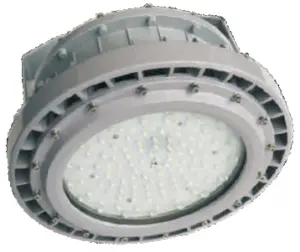
UFO C Series
Brand: Venas
Up to 32,500 lumens; Surface, pendant mounts; ETL: UL1598 / UL1598A / UL844 / CSA C22.2; Class 1, Div 1, Class 1, Div 2; 60/80/100/150/250W;
Prices start at $495.
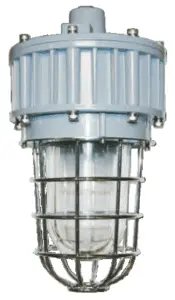
G Series
Brand: Venas
Wall, Low Bay; C1 D1
Spherical Glass Diffuser with Wire Guard, Up to 5400 lumens; ETL: UL1598 / UL1598A / UL844 /CSA C22.2; 30/40W;
Prices start at $300
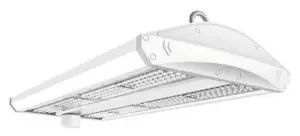
HB
Brand: FY
NSF Linear High Bay
Food, Splash, Non-Food Zones; NEMA4X, IP69K, NSF, 1500 PSI Hose Down, Operating Temp: -40C to 55C; UL, CE, DLC;
80/120/160/200/300W.
Prices start at $300.
ILW
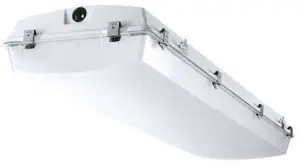
Brand: Atlas
NSF Industrial LED Linear
Wet Location; Tri-Proof;
NEMA4X, IP65, IP66 & IP67,
IP69K,(2ft only), NSF, 1500 PSI Hose Down, UL, cUL, DLC; 2ft and 4ft; Made in USA 76/98/130/190W.
Prices start at $400.
U-UHBHO
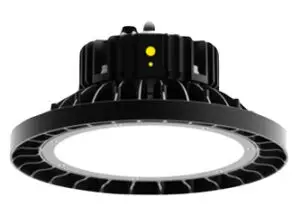
Brand: Altech
the premium replacement for cold storage lights; Op Temp. -40° F to 150° F; UL, DLC 4.2, FCC, CE, RoHS; Waterproof High Bay with glass lens, up to 54,400 lumens;
100W/150W/240W/320W.
Prices start at $268.
Edge
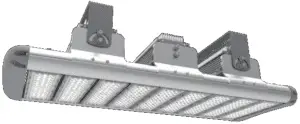
Brand: E-Lite
ETL, cETL, DLC,
op. temp. -30 to 80°C; up to 63,000;
50/100/150/200/300/450W.
Prices start at $300.
HB series
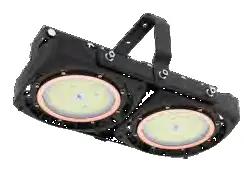
Brand: Venas
158°F (70°C); Up to 90,000 lumens; 100/150/200/300/
400/450/600W;
Prices start at $300.
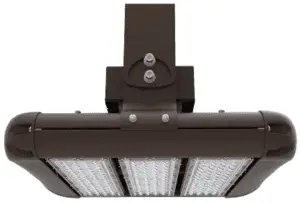
Edge
Brand: E-Lite
Phillips LEDs, up to 96,000 lumens; DLC, ETL, CE;
High Temp High Bay
120/ 200/300/400/600W.
Prices start at $300.
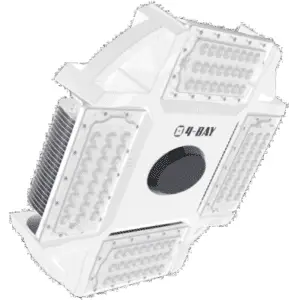
CO-4 Bay
Brand: G-Comin
featuring four rotatable modules; rotates up to 200 degrees; Direct and Indirect lighting up to 76,800 lumens 100/150/200/240/300/400/480W;
Prices start at $300.
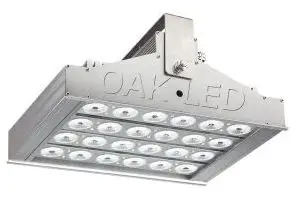
Oak-HBL
Brand: Oakled
up to 81,600 lumens;
90/120/160/200/240/300/360/
480/500/800/900W.
Prices start at $300.
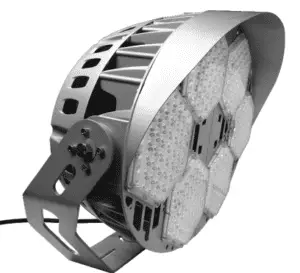
Stadium Eyes
Brand: Altech
excellent for large outdoor fields; stadiums, parks, shipyards, airports, Up to 85,200 lumens; 400/600W;
Prices start at $850.
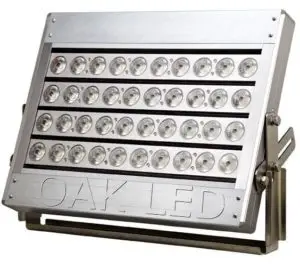
Oak-FL
Brand: Oakled
Anti- glare Design;
up to 170,000 lumens
400/500/720/900/1000W.
Prices start at $600.
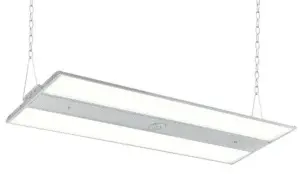
LHB
Brand: Nebulite
2FT: 80/100/140W (Selectable)
2FT: 165/220W (Selectable)
4FT: 165, 225W (Selectable);
4FT: 325W;
Prices start at $200.

X-ATLHB
Brand: LightingX
Wattage Selectable and CCT Selectable, Sensor Ready, Marine-Grade Powder Coating
Frosted Fire-Rated Polycarbonate Lens,
304 Stainless Steel Hardwares, up to 68,000 LM @ 400W.; Prices start at $200.;
Prices start at $200.

Halo series
Brand: G-Comin
IP69K, food processing; pharmaceutical; High-pressure, water-resistant, Steam resistant;
up to 38,400 lumens
50/80/100/150/200/240W;
Prices start at $200.
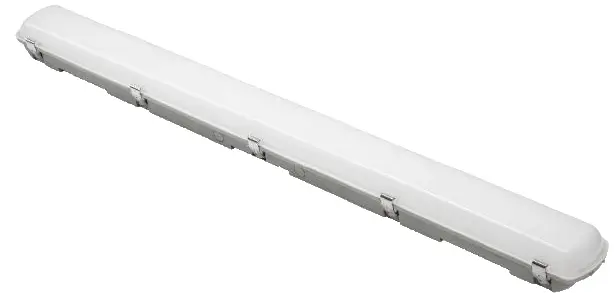
VP
Brand: Nebulite
Wattage, CCT Select
30W/40W/50W; Up to 5,750 lumens; Waterproof, Dust-proof; OP. Temp -22°F – 122°F; DLC, ETL; Prices start at $200.
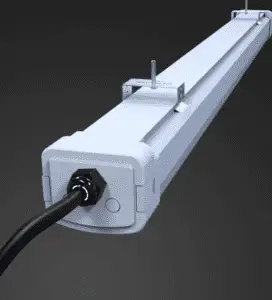
Luna
Brand: E-Lite
Tri-Proof Lights; Dustproof, waterproof and corrosion-proof; IP66, IK10 rated;
Op. Temp -49°F to 113°F; 30/55/ 70W; up to 9,100 lumens; Prices start at $200.
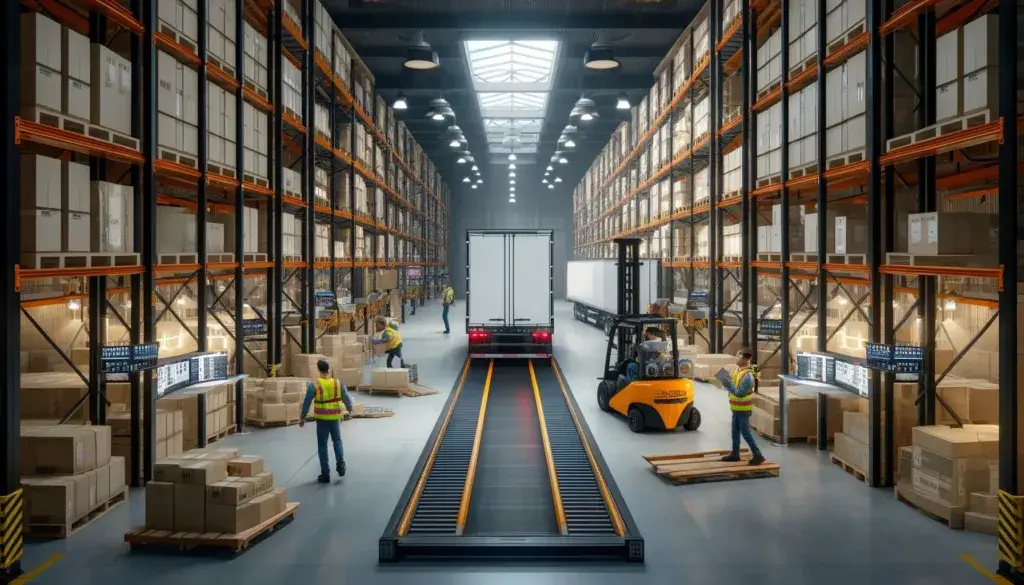
What Is Industrial Lighting?
Industrial lighting refers to lighting systems designed for manufacturing, processing, storage, and large-scale operational environments where durability, high output, and reliability are essential. These systems are engineered to perform in demanding conditions while providing consistent illumination for safety and productivity.
Common industrial lighting applications include warehouses, factories, distribution centers, cold storage facilities, and hazardous environments. Fixtures are selected based on ceiling height, environmental conditions, and operational requirements to ensure proper visibility and efficiency.
Industrial lighting encompasses far more than high-output fixtures. Facility type, mounting height, environmental conditions, light levels, controls, safety requirements, and operating schedules all influence system design. Our What Is Industrial Lighting? guide explains the fundamentals of industrial lighting and the factors facility managers should consider when selecting a lighting system.
Learn where High Temp LED High Bay fixtures are commonly installed in demanding industrial environments
When to Use Industrial LED Lighting
Industrial LED lighting is specified when:
-
High ambient spaces (e.g., tall ceilings) require uniform, high-output illumination
-
Task-critical areas demand accurate visual performance (assembly, inspection)
-
Safety and compliance with regulatory illumination standards are required
-
Energy and maintenance savings are part of operational efficiency goals
-
Harsh or challenging conditions (dust, temperature variance, vibration) are present
Industrial lighting systems are selected not just for brightness, but for consistency, durability, and performance across the facility’s use profile.
Industrial facilities use several types of lighting fixtures depending on ceiling height, operating conditions, workspace requirements, and the area being illuminated. For a closer look at the major fixture categories and where each is commonly used, see our guide to the different types of industrial lights.
Industrial Lighting Systems by Application
Industrial lighting systems are selected based on facility layout, environmental conditions, and operational requirements, with different fixture types designed to support specific applications across industrial environments.
High Ceiling & Open Area Lighting
Industrial environments often require a combination of ambient and broad-area illumination strategies to support general operations, safety, and task visibility. Large high-ceiling spaces benefit from LED high bay lighting or LED linear high bay systems that deliver high output and broad distribution from elevated mounting heights. Lower ceiling or mezzanine zones may be better served by LED low bay lighting or LED linear strip lights, which provide uniform illumination in tighter vertical spaces. Outdoor yards, ports, and staging areas will frequently incorporate LED high mast lighting to deliver wide coverage over expansive surfaces with minimal poles.
Controlled Environment Lighting
Many industrial facilities operate in environments with specific constraints that influence luminaire selection. Cold storage areas demand cold storage lighting engineered to maintain performance at low ambient temperatures without compromise to LED output or life. In moisture- or washdown-prone zones, LED vapor-tight jelly jars and LED vapor-tight linear lighting provide sealed protection against water, dust, and corrosive atmospheres. For high heat environments, LED high-temperature high bay lighting is specified with thermal management that withstands elevated ambient conditions without derating performance.
Task & Supplemental Lighting
Beyond general ambient systems, many industrial workflows require task-specific or supplemental illumination to support detailed work, inspection, or transition spaces. LED portable work lights are rugged mobile solutions that provide focused illumination where temporary, flexible lighting is needed. Long enclosed pathways such as passages, underpasses, or interior corridors often gain clarity from dedicated tunnel lights designed for linear continuity and comfortable visual gradients. Sanitary process environments that require hygienic performance often specify NSF-certified LED lighting, ensuring that surfaces, materials, and installation conform to food and beverage or pharmaceutical standards.
Infrastructure & External Systems
Certain industrial zones intersect with external infrastructure and safety systems that extend beyond traditional floor lighting. Facilities near waterways or marine loading docks, for example, may include LED marine navigation lights that support vessel movement and safety near piers and quays. Structural support zones, conveyor transitions, and material handling routes may rely on well-placed ambient and accent lighting from a combination of industrial systems, reinforcing safe movement and operational clarity throughout the facility. Across these applications, selecting the correct mixture of fixtures — from broad ambient systems to supplemental or specialized luminaires — ensures that industrial lighting supports both performance and safety objectives.
Typical Industrial Lighting Specifications
Light Output: High lumen packages calibrated to mounting height and task needs
Optical Distribution: Precision optics to support uniformity and minimize glare
Color Quality: Correlated color temperatures (CCT) and Color Rendering Index (CRI) chosen for task clarity
Construction: Durable housings engineered for industrial environments
Environmental Ratings: IP65 or higher for moisture, dust, and particulate resistance
Control Compatibility: Dimming, occupancy sensing, networked lighting management
Facilities with motors, machinery, transformers, and other switching loads should also evaluate industrial surge protection for sensitive LED drivers and controls.
Final selection is driven by illumination targets, facility configuration, and operational considerations rather than simple wattage.
Industrial Lighting Planning & Selection
How are industrial lighting systems specified?
Lighting systems are specified by evaluating facility size, mounting heights, task requirements, and environmental factors. Photometric modeling and foot-candle targets are commonly used to confirm fixture count, spacing, optics, and aiming strategies that satisfy performance criteria. LED lighting for refrigerated warehouses.
Why is uniformity important in industrial settings?
Uniformity reduces eye fatigue, minimizes shadows, and improves safety in material handling, inspection, and operational workflows. Good uniformity enhances visual performance across racks, aisles, and workstations.
How does mounting height influence fixture choice?
Higher mounting heights require higher lumen output and optimized optics to maintain foot-candle levels at task surfaces. Lower mounting heights allow for modest output with broader distribution.
When should controls be integrated into an industrial lighting design?
Controls such as occupancy sensors, scheduling, and networked dimming can reduce energy use, align illumination with operational cycles, and support predictive maintenance. Control strategies should be aligned with facility workflow, occupancy patterns, and safety requirements.
Our Industrial Lights pillar explains how different fixture types work together to illuminate warehouses, manufacturing plants, and industrial facilities. Visit the Industrial Lighting Fixtures and Their Uses guide to understand which fixtures are best suited for specific applications.
Common Applications
Industrial LED lighting is widely used in:
-
Warehouses and distribution centers
-
Manufacturing and assembly lines
-
Cold storage and freezer zones
-
Heavy industrial processing facilities
-
Material handling and logistics hubs
Industrial facilities often require more than one type of lighting solution. Warehouses, production areas, loading zones, workstations, and other operational spaces each have different illumination requirements. Explore ways to use LED lighting throughout an industrial space for additional application ideas and planning considerations.
Mounting Height & Lumen Strategy for Industrial Lights
| Mounting Height | Typical Output Strategy |
|---|---|
| 10–15 ft | Moderate lumen high bay |
| 15–25 ft | Mid-range high bay |
| 25–35 ft | High-output long-throw optics |
| 35+ ft | Ultra-high output and tight optics |
Large aviation facilities present similar high-bay challenges, where mounting height, aircraft clearance, maintenance access, and uniform illumination all affect fixture selection. See our guide to LED hangar lighting for airline and aircraft facilities for additional application considerations.
Task Zone vs Aisle Zone Lighting Strategy
| Zone | Lighting Priority |
|---|---|
| Racking aisles | Vertical clarity and reduced shadows |
| Workstations | Task-specific brightness |
| Loading docks | Balanced wide coverage |
| Open floor | Uniform horizontal illumination |
Lighting Quality & Safety Considerations
-
Minimize glare and visual fatigue
-
Enhance label and mark readability
-
Improve camera performance for security
-
Support ergonomic task lighting
Inline Buyer Q&A
How do I choose the right industrial LED lighting for my facility?
Start with the application and operating environment.
Consider facility dimensions, mounting height, visual tasks, required illumination, operating hours, voltage, controls, temperature, moisture, dust, vibration, corrosive exposure, washdown requirements, and any hazardous-location or sanitation requirements.
The appropriate fixture should satisfy both the lighting requirements and the conditions in which it will operate.
What type of industrial fixture should I use for high ceilings?
High bay fixtures are commonly used in warehouses, manufacturing facilities, distribution centers, hangars, and other spaces with higher mounting heights.
Linear high bays can work well over aisles, production areas, and rectangular layouts, while round or UFO-style high bays can be appropriate for more open spaces.
Fixture output, optical distribution, spacing, mounting height, and facility geometry should determine the selection rather than fixture shape alone.
Do harsh industrial environments require specialized fixtures?
They can.
High temperatures, freezing conditions, moisture, washdown, dust, vibration, corrosive materials, food-processing requirements, and hazardous substances can require fixtures specifically designed and rated for those conditions.
A standard industrial LED fixture should not automatically be assumed suitable simply because it is marketed as heavy-duty.
How do I determine how many industrial fixtures my facility needs?
Fixture quantity depends on facility dimensions, mounting height, fixture output and distribution, required illumination, uniformity, obstructions, surface reflectance, equipment layout, and the activities being performed.
For warehouses, manufacturing plants, production areas, and other larger industrial facilities, photometric analysis can help evaluate fixture quantity, spacing, predicted illumination, and uniformity before equipment is installed.
Can existing HID or fluorescent industrial lighting be replaced with LED?
Yes. Metal halide, high-pressure sodium, fluorescent high bays, linear fluorescent systems, and other legacy lighting technologies can often be upgraded to LED.
The replacement should be based on required lighting performance rather than wattage equivalency alone. Existing fixture locations, mounting heights, electrical conditions, controls, required output, and environmental conditions should be evaluated as part of the retrofit.
What information should I provide when requesting an industrial lighting quote?
Useful project information includes:
- Facility and application type
- Building dimensions or floor plans
- Mounting or ceiling height
- Existing fixture types and quantities
- Voltage
- Required or desired illumination
- Operating hours
- Temperature range
- Moisture, dust, washdown, vibration, or corrosive exposure
- Hazardous-location classification where applicable
- Control requirements
- New construction or retrofit
- Project location and schedule
Providing this information helps identify appropriate fixture families and determine whether photometric analysis or additional project evaluation is needed.
Need Help Selecting Industrial LED Lighting?
Industrial facilities can have very different lighting requirements depending on mounting height, production activities, operating environment, equipment layout, controls, and applicable facility requirements.
Whether you’re upgrading a warehouse, manufacturing plant, distribution center, processing facility, maintenance building, or specialized industrial environment, our lighting specialists can help evaluate fixture types, environmental ratings, retrofit options, controls, and lighting layouts.
Call 1-844-533-7767 to discuss your industrial lighting project.
Frequently Asked Questions About Industrial Lighting
What are industrial lights?
Industrial lights are fixtures and lighting systems used in manufacturing, warehousing, production, processing, maintenance, distribution, utility, and other operational environments.
Industrial lighting can range from general high bay and linear fixtures to specialized equipment designed for high temperatures, cold storage, washdown areas, food processing, hazardous locations, or other demanding conditions.
Not every industrial fixture is designed for every industrial environment, so product ratings should be matched to the application.
What are the different types of industrial lights?
Common industrial LED fixture categories include:
- High bay lights
- Linear high bays
- Low bay fixtures
- Vapor-tight linear fixtures
- Strip and linear lighting
- Task lighting
- Flood and area lighting
- High-temperature fixtures
- Cold-storage lighting
- Food-processing and sanitation-related fixtures
- Hazardous-location and explosion-proof lighting
Older industrial facilities may also contain metal halide, high-pressure sodium, fluorescent, and other legacy lighting technologies.
For a deeper comparison, review our Industrial Lighting Fixtures and Their Uses guide.
How do I choose the right industrial lighting for my facility?
Fixture selection should consider facility geometry, mounting height, required illumination, visual tasks, operating hours, environmental conditions, controls, maintenance requirements, and applicable certifications or facility requirements.
The lighting system should be selected for the actual application rather than relying solely on fixture wattage or lumen output.
Our Industrial Lighting Guide provides a more detailed look at industrial lighting selection and planning.
What are the benefits of LED industrial lighting?
Compared with many older HID and fluorescent systems, appropriately selected LED industrial lighting can provide:
- Reduced energy consumption
- Longer maintenance intervals
- Improved controllability
- Instant-on operation
- More targeted optical distributions
- Dimming and sensing capabilities
- Reduced routine lamp replacement
Actual performance and savings depend on the existing system, replacement fixtures, operating conditions, controls, and lighting requirements.
How do I calculate the amount of light needed for an industrial space?
Industrial lighting should be based on the illumination required for the activities being performed, not simply the square footage of the facility.
Room dimensions, mounting height, fixture distribution, equipment and rack layouts, surface reflectance, visual tasks, uniformity, and applicable recommendations or standards can all influence the design.
Review our Lighting Level Recommendations resource for additional guidance. Larger or more complex facilities can benefit from photometric analysis.
Can industrial lights be used outdoors?
Some industrial fixtures are designed and rated for outdoor use.
Outdoor suitability depends on the fixture’s environmental ratings, construction, temperature range, electrical components, mounting, and exposure to rain, dust, corrosion, wind, and other conditions.
An indoor industrial fixture should not be assumed suitable outdoors simply because it has rugged construction.
How can I reduce energy costs with industrial lighting?
Potential strategies include replacing inefficient legacy fixtures with appropriately designed LED systems, reducing unnecessary fixture wattage or quantity, incorporating occupancy or vacancy sensing, scheduling, daylight-responsive controls, and maintaining the lighting system properly.
Actual savings should be evaluated using existing and proposed wattage, fixture quantities, operating hours, electricity rates, controls, and required lighting performance.
Are industrial LED lights suitable for extreme temperatures?
Some are specifically designed for high- or low-temperature operation, but standard LED fixtures have manufacturer-defined ambient operating ranges.
Facilities such as foundries, steel processing areas, cold-storage warehouses, freezers, and other temperature-intensive environments should use fixtures whose published temperature ratings are appropriate for conditions at the actual fixture location.
Do industrial facilities need explosion-proof lighting?
Only where the applicable hazardous-location classification requires appropriately certified equipment.
Facilities where flammable gases, vapors, combustible dusts, or other hazardous materials may be present require evaluation of the specific hazardous-location classification.
A rugged, vapor-tight, wet-location, or high-IP industrial fixture is not automatically explosion proof.
Can industrial LED lighting use occupancy sensors and other controls?
Yes. Many industrial LED systems can incorporate occupancy or vacancy sensing, dimming, scheduling, daylight-responsive controls, or networked lighting-management systems.
Controls can be particularly useful in warehouses, aisles, storage areas, and other spaces with variable occupancy.
Fixture, driver, sensor, environmental, and control-system compatibility should be verified during equipment selection.
Stay Connected with Our Lighting Resources
Add IndustrialLightingFixtures.org as a Preferred Source on Google to see more of our lighting guides and technical resources across Google Search experiences.

Related Industrial Lighting Systems
- LED High Bay Lighting — Explore high-output LED lighting for warehouses, manufacturing facilities, distribution centers, hangars, and other higher-mounting applications.
- LED Linear High Bay Lighting — Review linear high bay solutions for aisles, production areas, warehouses, and industrial spaces where fixture geometry and distribution influence the lighting layout.
- LED High-Temperature High Bay Lighting — Explore specialized high bay fixtures for foundries, manufacturing areas, and other elevated-temperature industrial environments.
- LED Vapor Tight Linear Lighting — Review sealed linear lighting for moisture-, dust-, washdown-, cold-storage-, and contamination-prone industrial environments.
- Explosion-Proof LED Lighting — Explore hazardous-location LED lighting for facilities requiring appropriately classified and certified lighting equipment.